Introduction
There is no quick fix to wellbeing.
And, it doesn’t require expensive retreats, yoga classes, or supplements.
Wellbeing that is authentic and sustainable requires internal work.
It requires a balanced focus on all aspects of our wellbeing – a balance that is unique to you, your life, and your needs.
A little background on the wellness industry:
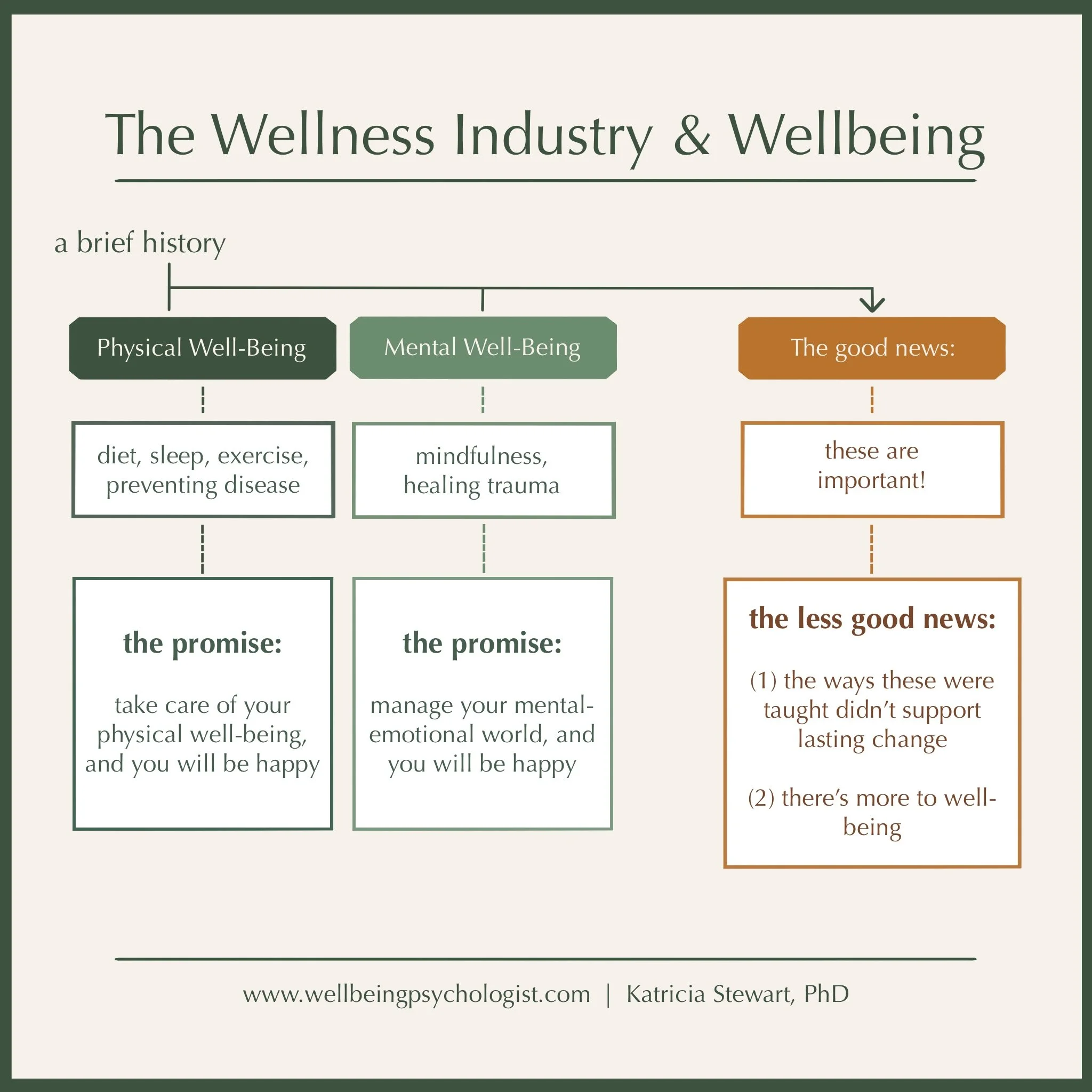
If we think about the evolution of the wellness industry over the years, we can see that it started with physical wellbeing: diet, exercise, sleep, preventing diseases, etc.
The promise was: if you take care of your physical being, you will have the life you want.
Later, the wellness industry moved into mental-emotional wellbeing: taking care of mental health, practicing mindfulness, working through trauma and emotional wounds.
The promise here was: manage your mental-emotional world, and then you’ll feel good about yourself and your life.
The good news is that those are all really important areas to focus on for our wellbeing. The bad news is…
The way these things were taught didn’t help some people make deep, lasting change in their lives.
There is much more to wellbeing than physical and mental-emotional wellness.
Many of us realize something is missing: we’re left longing for quality relationships and connections to community, and we’re wandering through life without a sense of purpose and direction.
And, we don’t know where to start with those things: How do we cultivate and support our relational and spiritual wellbeing?
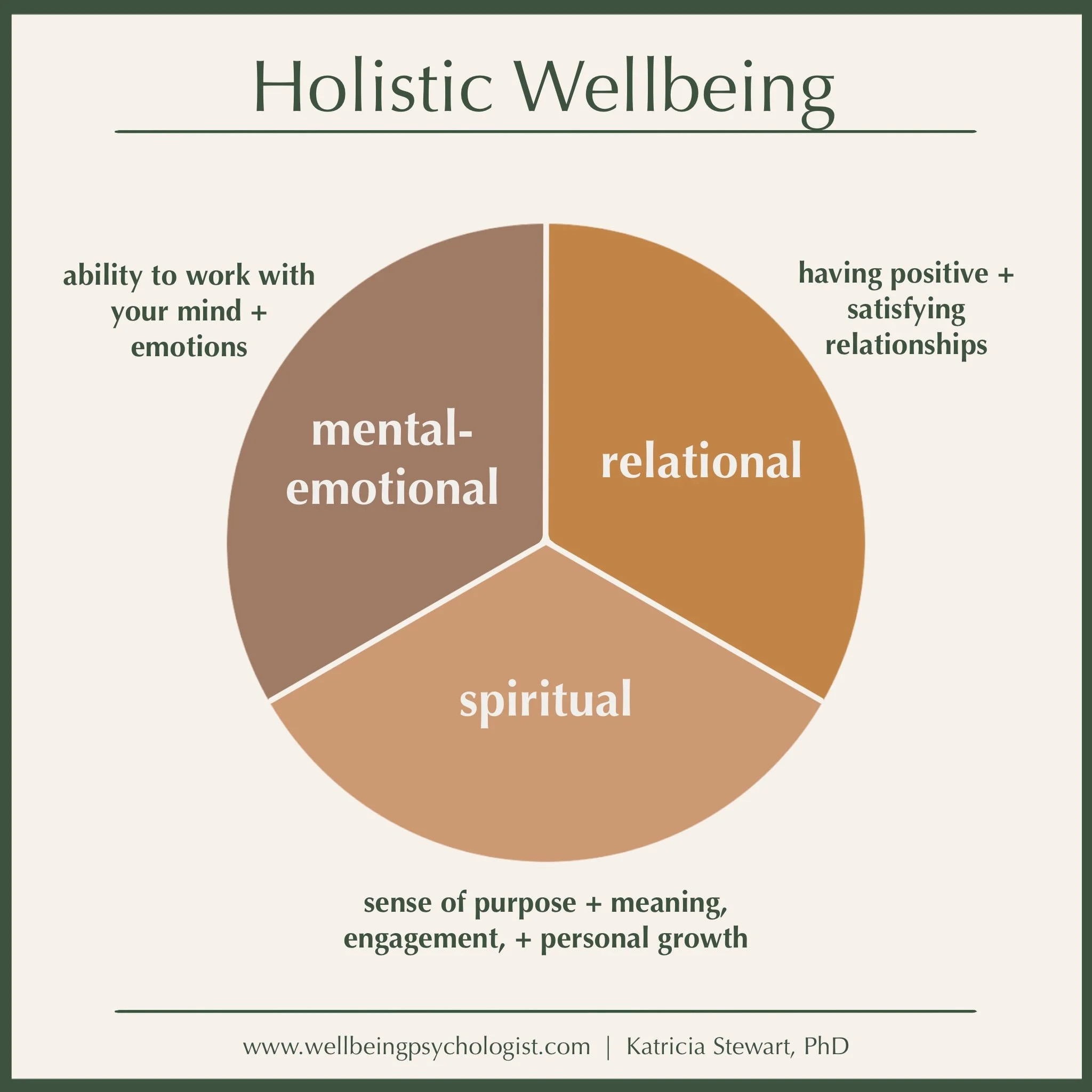
Relational wellbeing: the quality of your relationships to your closest others, your community, and the natural world.
Spiritual wellbeing: fulfilling the human need for meaning, purpose and connection to something greater than ourselves.
This course aims to support you in finding more balance across all* areas of your wellbeing (mental-emotional, relational, and spiritual), and it will provide you with tools and starting-points for cultivating your wellbeing authentically.
*Note: I do not cover physical wellbeing in this course. That is a huge topic and I am not an expert in the physical body. I have done extensive research on physical wellbeing for personal reasons, and I am willing to talk with participants one-on-one to discuss physical wellbeing in very general terms (e.g., listening to your body, finding balance between rest and activity, etc.). Beyond that, I can only make recommendations for other kinds of experts or resources to look into.

Areas of Wellbeing that This Course Covers
Below is a brief overview of the primary components of wellbeing that this course focuses on. Part 2 is a deep-dive into each of these, including reflection questions for you to understand where you are currently at with these areas of wellbeing as well as practices to cultivate these areas of your wellbeing. Part 3 is about creating last change in your life to support your lifelong wellbeing.
Mental-Emotional Wellbeing
Mental-emotional wellbeing is about being able to work with your mind and emotions. Being able to work with your mind and emotions is key to so many other aspects of life. And it is foundational to developing deep, meaningful, relationships with others and our communities (relational wellbeing), as well as our ability to hone in on our purpose, meaning, and growth (spiritual wellbeing).
Relational Wellbeing
Our relational wellbeing is about having positive and satisfying relationships with others, social acceptance and contribution, and sense of community and social support.
Spiritual Wellbeing
Spiritual wellbeing encompasses your reason for getting up in the morning and the process of cultivating and realizing your inner potential. It’s about your sense of meaning in life; your sense of growth and development; your sense of connection to something greater than yourself.
Goals of this Course
The goals of this course are simple:
Learn about what holistic wellbeing actually is.
Make what you learn actionable (adj.: able to be done or acted on; having practical value).
How will this course help you reach those goals?
(1) Knowledge
Learning about wellbeing.
There’s a lot of hype out there about wellbeing — and that’s great! And, there’s a lot of misinformation that comes along with it. That includes a lot of “fluff” around wellbeing that takes us away from what it really is and how to grow it in our own lives.
This course brings us back to the foundations of wellbeing: what holistic wellbeing is, what it looks like, and how we nurture it in our own lives.
(2) Self-reflection
Taking that knowledge and applying it to your own life.
Throughout the course are in-depth opportunities for self-reflection that help you apply what you’re learning about wellbeing to your own life. These questions help you assess your own mental-emotional, relational, and spiritual wellbeing, which then helps point you to how you might want to grow in your wellbeing. That area of growth points you to the practices you might incorporate into your life.
(3) Practices
Practice cultivating each area of wellbeing.
Knowledge about what wellbeing is — and what you’re working towards — is essential. But it’s only the first 10%. From there, you have to do things that actually support your wellbeing’s growth. That’s what the practices are for.
(4) Creating lasting change
How do we make this stick long-term?
You’ve learned about wellbeing, you’ve reflected on it in your own life, you’ve tried out some practices. Now what?
This part of the course is about setting goals for your wellbeing, creating a plan (with practices) to support those goals, and then provides some education on behavior change and what tends to trip us up when we strive to improve ourselves or our lives — along with structures for overcoming those barriers.
There are so many resources out there for what to do, but not a lot of them tell you how or provide you with structures and support for making it happen. This course starts that structure and support. You can then run with it, ask others in your life for support, or reach out to me for additional offerings that might support your ongoing journey.